
Training your staff in data and records management helps your business operate more efficiently and improves compliance.
If you want to safeguard your valuable information while improving business operations, train your staff in data and records management. While records management may not be an obvious source of efficiency gains, consider how much time your staff spends filing, retrieving, and sharing important documents each day. If your employees don’t know how to store and organize files properly, every business process is taking at least a little longer than it should. When you add up across your whole staff, you could be losing hours of productivity each week, or days each month.
This guide will walk you through records management training strategies for your staff, from implementing best practices to enrolling in certification courses. We’ll also break down various types of records management certification and help you determine which ones might be right for your staff. With the right gear and training, your staff can keep your vital records both safe and accessible.
Jump to a section:
- What is data and records management?
- Benefits of records management training
- Which skills does records management training teach?
- Records management best practices
- What are records management certifications?
- Records management certification benefits
- Types of records management certifications
- Our recommendation: RICOH fi Series Scanners
What is data and records management?
Data and records management is the process of creating a system for storing, organizing, and sharing your important business documents. These documents can take the form of either physical paperwork or digital files. Unlike simple document storage, data and records management has a purposeful, systematic design to maximize efficiency.
As an easy example, stashing a bunch of old papers in a box at the bottom of a closet is document storage. Digitizing all of your paperwork with a document scanner and scanning software, then organizing those digital files on an access-controlled cloud server, is records management.
In order to develop a cohesive records management system, you’ll need to train your staff, using either in-house resources or a dedicated records management certification program.
Benefits of records management training
Robust records management training forms a foundation for more efficient workflows. Some benefits of training include:
- The ability to quickly store, retrieve, share, and replace records
- More accurate sorting and routing for new records
- Precise metadata tags that make future retrieval easier
- Fewer lost files and faster retrieval of misplaced ones
- Skilled, independent workers who create fewer bottlenecks
In addition to making individual employees more efficient, a records management training program provides infrastructure through which a business can disseminate changes in policy when regulations or other compliance standards shift. As a result, management can quickly and effectively pivot workflows and comply with industry regulations.
Did You Know?:The RICOH fi-8170 can scan up to 70 pages per minute, with a 100-sheet automatic document feeder (ADF) to keep things moving quickly. Click here to learn more.
Which skills does records management training teach?
Some of the most beneficial skills records managers can master include:
- Information management refers to the tools and techniques used to keep records organized and safe. It can include knowledge of records management best practices, such as those recommended by the International Standards Organization (ISO). Workers can improve their information management skills through courses that teach records management standards and governance, risk, and compliance (GRC) tools.
- Compliance knowledge ensures that your business keeps records in a way that complies with your industry’s regulatory standards. This knowledge will empower them and other workers who interface with records to keep the business safe from fines and other penalties. Reviewing compliance standards to stay up to date and taking the occasional refresher quiz can improve skills in this area.
- Subject matter expertise, or a meaningful understanding of your industry, makes it easier for a records manager to establish, maintain, and improve a record-keeping system through tools such as meta-tagging because they better understand what’s important to their coworkers. That means potentially increasing productivity for everyone involved. Record managers can cultivate this knowledge through cross-departmental workshops and guided or independent research.
- Communication: Communication is the glue that holds these skills together, allowing a records manager to understand what coworkers need and relay it to them efficiently. It can be improved through active listening, writing workshops, and soliciting feedback from coworkers regarding clarity of communication.
Records management best practices
Once employees receive specialized training, they can develop a set of records management best practices. While every business will develop a somewhat different approach to data and records management, a few basic principles apply across the board:
- Lock down fundamentals: To start, identify the overall goals, roles, and responsibilities of your records managers. If employees understand why records are stored in a certain way, the role that records play in your business, and the bounds of their responsibilities, they can work more effectively.
- Develop compliance culture: Instructing employees on compliance standards is important, but receiving instruction doesn’t always directly translate into execution. By highlighting compliance at every step of the records management process, you can encourage everyone on the team to make it a habit. Explain the potential risks of noncompliance, but emphasize the benefits of compliance more.
- Create a shared vocabulary: Clear communication requires a shared set of mutually understood terms. Using a highly regarded standard such as ISO 15489 as a baseline for vocabulary promotes common understanding among employees, ensuring clearer communication, easier information retrieval, and closer alignment on storage practices.
- Incorporate interactive elements: Every employee learns in different ways, but few methods teach as quickly or effectively as practice. By having employees store sample records, apply relevant meta tags for retrieval, and schedule out document lifecycles, you can evaluate their skills and provide instruction where needed.
Did You Know?:RICOH fi Series scanners were designed to streamline administrative processes and increase productivity. Click here to learn more about this powerful line of digitalization tools.
What are records management certifications?
Records management certifications are programs that train employees in specific data and records management skills. These programs are good for both employers, who gain access to specialized skill sets, as well as employees, who may need certifications to advance their careers. There are many different certifications available, each one emphasizing a different aspect of records management.
Records management certification benefits
Employees have a lot to gain by completing a records management certification program. Some of the benefits include:
- Validating professional expertise: Some employees already have advanced records management skills. Certifications are an objective measurement of those skills.
- Learning new skills: Records management might be a totally new concept for some employees. Certification courses are an excellent way to learn a whole new skillset.
- Keeping existing skills up-to-date: Business technology changes quickly, especially in the records management field. Even skilled employees can learn new techniques in certification courses.
- Improving on-the-job performance: Employees with records management certifications can perform up to 70% better in their positions.
- Qualifying for higher-paying positions: Certifications help employees qualify for more demanding work, which helps them advance in their careers and helps employers fill more positions internally.
Types of records management certifications
Certified Records Analyst
A Certified Records Analyst (CRA) is qualified to handle the day-to-day operations of a RIM organization or department. They create and maintain records that comply with industry standards and are well-versed in records systems, appraisal procedures, and retention practices. Here is how to become certified under the CRA:
- Certification method: CRA applicants must pass three multiple-choice exams with 100 questions each. Candidates can complete their records management certification online.
- Application fee: $100
- Prerequisites: The preferred qualifications for taking the CRA exams are a four-year college or bachelor’s degree and one year of employment in records and information management. Applicants can substitute additional years of RIM employment in exchange for incomplete years working on a degree. For example, a high school graduate with five years of experience in records and information management could apply.
- Industry recognition: CRA certifications are issued by the Institute of Certified Records Managers (ICRM), an internationally-recognized certifying organization for professionals in the field.
- Continuing education or recertification: To remain up-to-date on the latest records management practices, CRAs must complete up to 100 “points” of approved educational activities every five years after their initial certification. Some examples include attending professional association meetings, publishing academic journal articles, or completing university courses.
Certified Records Manager
A Certified Records Manager (CRM) is an expert in records management theory, strategy, and implementation. Using the CRA program as a baseline, CRM candidates complete three additional examinations that address management principles, the role of technology in RIM, and business use cases. The certification is primarily for individuals in leadership positions who design and manage records management policies that CRA professionals will help implement.
The CRM certification supersedes CRA, which means any CRA-qualified employee can complete the additional exams to upgrade their status to CRM:
- Certification method: CRM applicants must complete five multiple-choice exams with 100 questions each. When these are finished, applicants register for a sixth exam with two essay questions. Candidates can complete their records management certification online.
- Application fee: $100
- Prerequisites: The preferred qualifications for taking the CRM exams are a four-year college or bachelor’s degree and one year of employment in records and information management. Applicants can substitute additional years of RIM employment in exchange for incomplete years working on a degree. For example, a high school graduate with five years of experience in records and information management could apply.
- Industry recognition: CRM certifications are issued by the Institute of Certified Records Managers, an international certifying organization for professionals in the field.
- Continuing education or recertification: CRM holders must complete up to 100 “points” of approved educational activities every five years after their initial certification to remain up-to-date on the latest records management practices. Some examples include attending professional association meetings, publishing academic journal articles, or completing university courses.
Certified Information Privacy Professional
The International Association of Privacy Professionals (IAPP) offers a range of training programs and certifications customized by region. This approach ensures that candidates receive records management course materials and certificates that reflect privacy laws in their country. These programs broadly fall into three certification branches:
- The Certified Information Privacy Professional (CIPP) certification emphasizes training in privacy laws, regulations, and frameworks in one of five regions:
- The Certified Information Privacy Manager (CIPM) focuses on designing and managing privacy programs for organizations.
- Finally, the Certified Information Privacy Technologist (CIPT) certificate is a benchmark for IT professionals to build and manage privacy systems.
These programs complement each other to reflect different levels of expertise. For example, an individual who completes both the CIPM and CIPP/E is qualified to be a Data Protection Officer in Europe.
- Certification method: Each certification requires the completion of an in-person or online exam. All tests are 2.5 hours and have 90 multiple-choice questions.
- Cost: $550 first-time examination fee. Each additional certification or exam attempt receives a $375 discount.
- Prerequisites: IAPP certifications are available with no privacy prerequisites — in fact, the organization offers plans to train and certify all staff within a department.
- Industry recognition: IAPP certifications are globally recognized benchmarks for privacy expertise. The organization’s US and European certifications are accredited by the American National Standards Institute’s (ANSI) accreditation board.
- Continuing education or recertification: CIPP-qualified professionals must pay a $250 maintenance fee or have an active IAPP membership to recertify every two years. This fee is collected after passing the exam to complete certification.
Certified Information Security Manager
The Certified Information Security Manager (CISM) certification is for individuals who manage, design, oversee, and assess the information security capabilities of an organization. From a records management perspective, these skills benefit leaders who prioritize information security as part of their role. They also provide high-level guidance and leadership to end-users, IT professionals, and systems engineers.
- Certification method: The CISM exam is a four-hour exam with 150 multiple-choice questions. Exam sessions are provided at authorized test sites or through remote proctoring.
- Cost: ISACA members pay a $575 examination fee, while non-members pay $760. There is also a $50 application fee.
- Prerequisites: CISM candidates must have five years of experience in an information security management role. Experience waivers are available for a maximum of two years.
- Industry recognition: CISM is a globally-recognized information security certification accredited by ANSI’s accreditation board.
- Continuing education or recertification: CISM holders must complete 20 hours of continuing professional education annually to maintain their certification.
Information Governance Professional
The Information Governance Professional certification demonstrates high-level understanding of RIM strategic practice. It is intended for leaders who assign records management goals for entire organizations, often while balancing risk mitigation and cost-effectiveness. IGP also strongly emphasizes laws and regulations that apply to records management.
- Certification method: The IGP exam is a three-hour, computer-based test with 140-question multiple choice questions.
- Cost: $599 application and examination fee
- Prerequisites: There are no educational or membership requirements for taking the IGP exam, but applicant eligibility is judged based on relevant experience. Candidates are expected to be highly familiar with industry trends, technologies, and case law.
- Industry recognition: The IGP certification is well-regarded in industries with a strong RIM focus. Some employers consider it a requirement for executive positions like Director of Information Governance, Director of Information Management, Chief Information Officer, Chief Privacy Officer, and related roles.
- Continuing education or recertification: Certificate holders must complete 60 contact hours every three years to maintain their credentials. They must also complete a recertification application with a $250 fee.
Want to master the lingo?:Our Document Scanning Glossary covers everything you need to know about the tools and terms behind going digital.
Our recommendation: RICOH fi Series Scanners
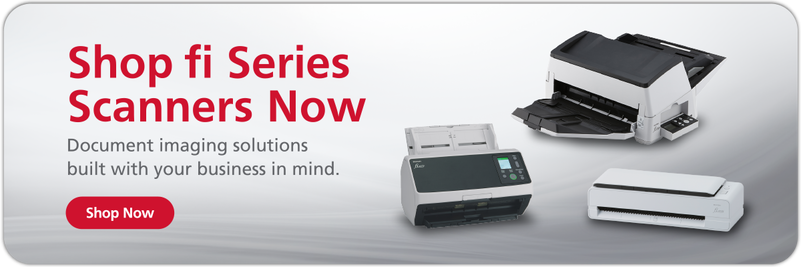
To implement a successful data and records management program at your business, you’ll want to start with a high-quality document scanner. Ricoh’s fi Series scanners are an excellent option, combining intuitive designs with powerful feature sets. Take, for example, the RICOH fi-8170 high speed desktop document scanner. This device can scan up to 70 double-sided documents per minute, with an automatic document feeder (ADF) that can hold 100 sheets at a time. The fi-8170 measures less than 12 inches across and weighs less than nine pounds, making it suitable for almost every kind of office setup. Ricoh’s fi Series scanners also support the versatile PaperStream Capture software, which can tag scanned files with precise metadata and route them to the proper folders.
For more information on how Ricoh can streamline your company’s data and records management training, contact us today.
Note: Information and external links are provided for your convenience and for educational purposes only, and shall not be construed, or relied upon, as legal or financial advice. PFU America, Inc. makes no representations about the contents, features, or specifications on such third-party sites, software, and/or offerings (collectively “Third-Party Offerings”) and shall not be responsible for any loss or damage that may arise from your use of such Third-Party Offerings. Please consult with a licensed professional regarding your specific situation as regulations may be subject to change.